
VentureDash by Network Kansas
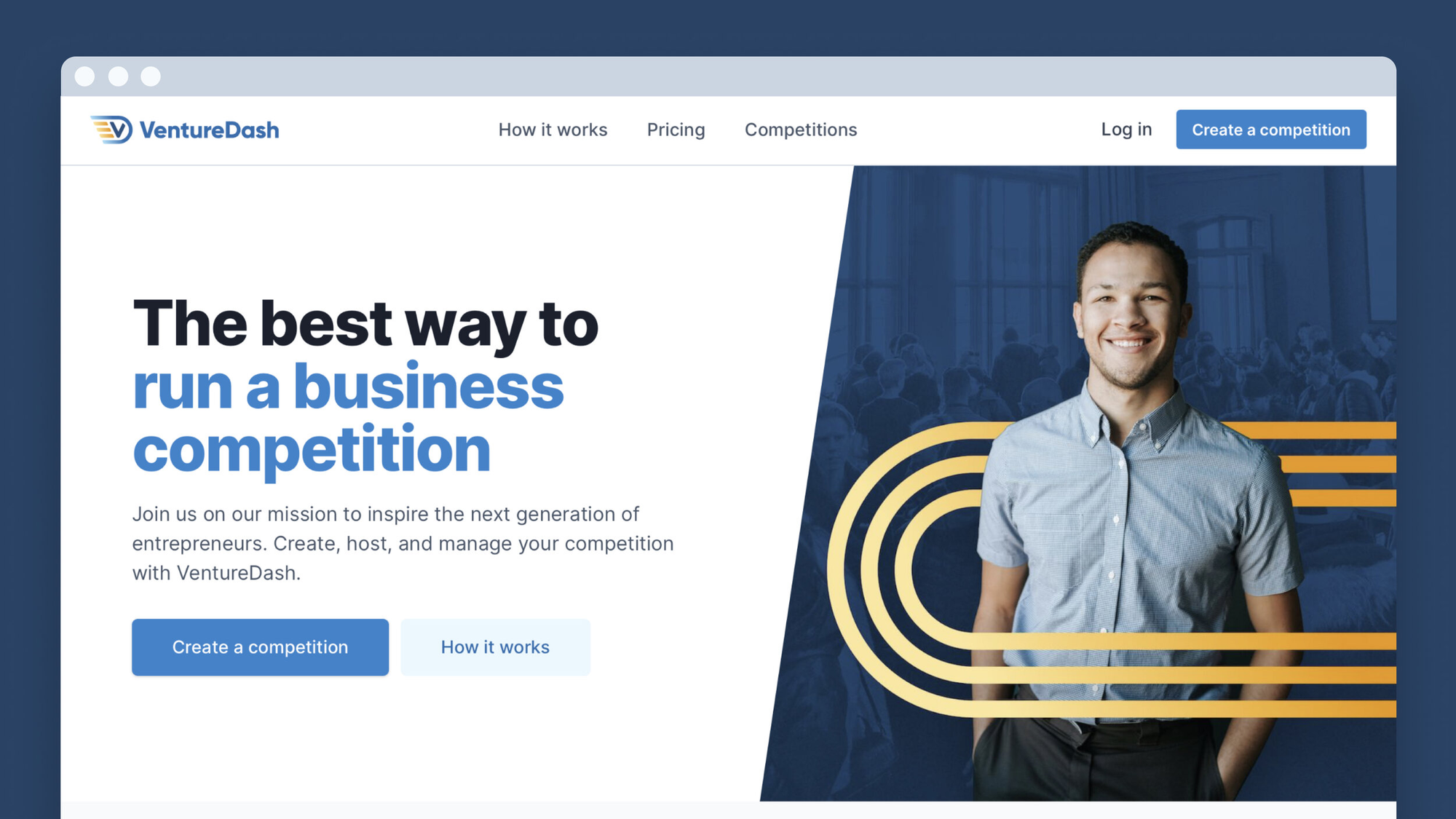
From Internal Workaround to Scalable Platform
NetWork Kansas had been running hundreds of business competitions across Kansas for years. Their secret weapon? A no-code database tool they'd rigged into a competition management system. It worked, barely. As they continued growing, the cracks showed. Organizers got lost in complex workflows. Judges struggled with the scoring interface. The system that had brought them so far was beginning to slow them down.
That's when they came to our team at Moonbase Labs.
Initially, they asked for a straightforward rebuild: take what they had, make it work better. But after spending time with their team to learn about their process, I saw something bigger.
Discovering the Real Opportunity
I talked to competition coordinators juggling spreadsheets, nonprofit directors who'd taught themselves how to use database tools, and volunteers doing everything manually. Everyone had their own workarounds, but nobody loved their solution.
The landscape of products on the market was fragmented. Some organizers used generic event platforms (designed for conferences, not competitions). Others paid for expensive enterprise tools built for corporate awards programs. Nothing felt purpose-built for entrepreneurship competitions, which involve a unique mix of applications, judging rounds, scoring systems, and participant communication.
NetWork Kansas had something none of these competitors had: decades of hands-on experience running successful business competitions. They knew what worked. They understood the specific needs of student entrepreneurs. They'd refined their process through years of trial and error.
That expertise could become a product.
I proposed repositioning the project. Rather than building an internal tool, we'd create a SaaS platform that codified NetWork Kansas's competition methodology. They could scale their impact beyond Kansas while opening a new revenue stream. The client was skeptical at first. They were a nonprofit, not a software company. But the business case was compelling.
✦ Organizers needed guidance, not just software — many had never run a competition before
✦ Existing tools either dumbed things down (losing important features) or overwhelmed users with unnecessary complexity
✦ The hardest parts weren't technical, they were process design (How should judging work? When should deadlines fall? How do we communicate with participants?)
✦ NetWork Kansas's methodology was their competitive advantage, not their technology
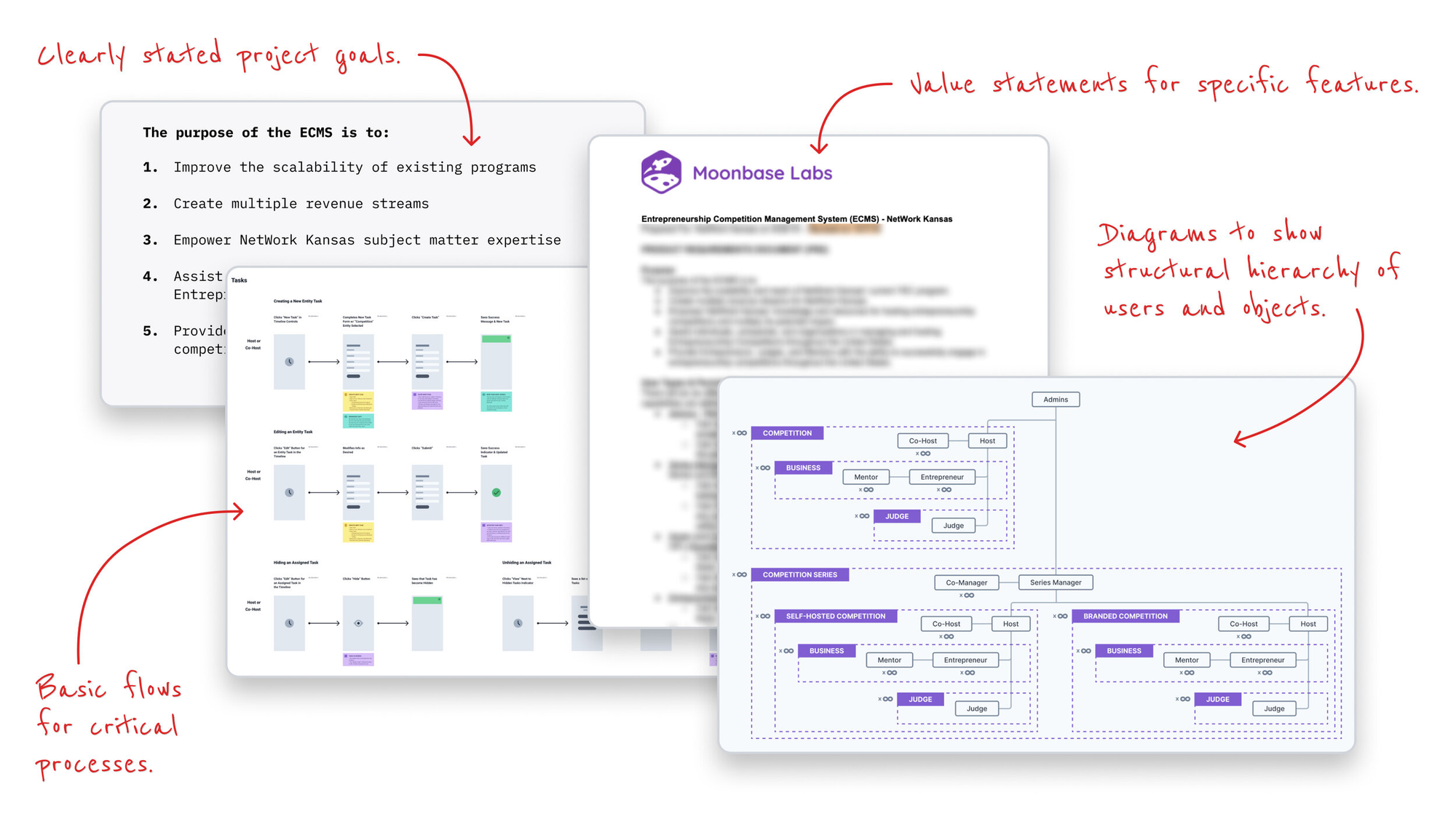
Throughout discovery, I created several strategic artifacts to align the team and client: project goals, a feature roadmap, user journey maps, and information architecture diagrams. These documents clarified the vision and gave developers the context they needed to build effectively.
Building a Brand, Not Just a Tool
The solution had grown from an internal tool to a product for customers nationwide. Internally, everyone called it "The ECMS" (Entrepreneurship Competition Management System). That wouldn't work.
I led NetWork Kansas through three branding workshops to develop a name and identity that would resonate with their target market: universities, nonprofits, and economic development organizations. Together, we landed on VentureDash. It was forward-moving, entrepreneurial, energetic. "The best way to run a business competition."
The brand challenge: NetWork Kansas didn't have budget for a marketing agency, and their small internal team had never launched a product like this before. I needed to deliver not just a logo and color palette, but a system they could actually implement and grow over time.
I created a brand package that included:
- Brand positioning and messaging guidelines
- Visual identity (logo, colors, typography)
- Icon system
- A full marketing website
- Email templates
- Creative direction for social media assets
- A simple brand guide written for non-designers
The brand needed to feel entrepreneurial (energetic, forward-thinking) and stable (trustworthy, professional). Inspiring for participants, reassuring for organizers. We landed on a bold blue with accent colors that felt modern without being trendy.
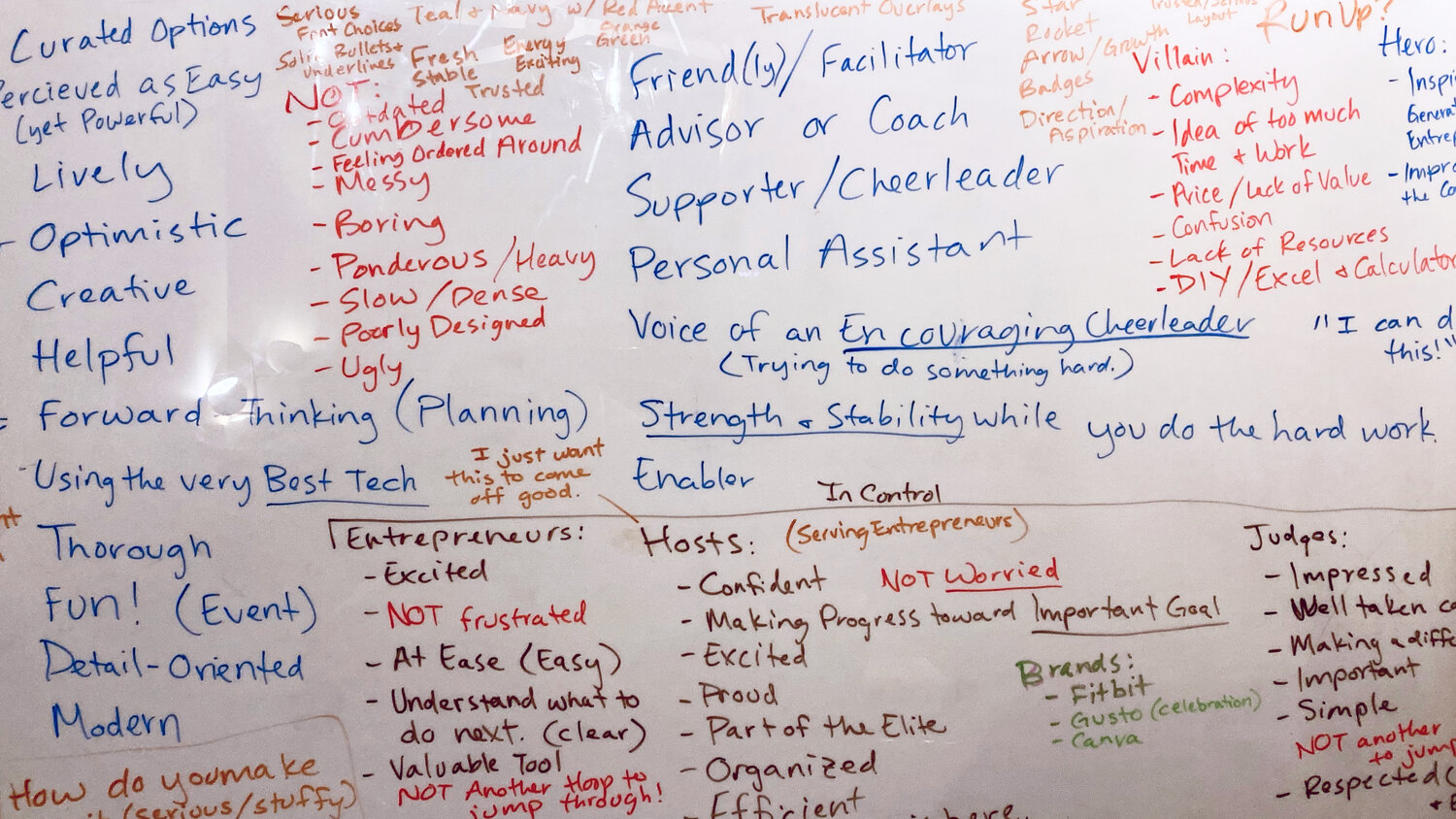
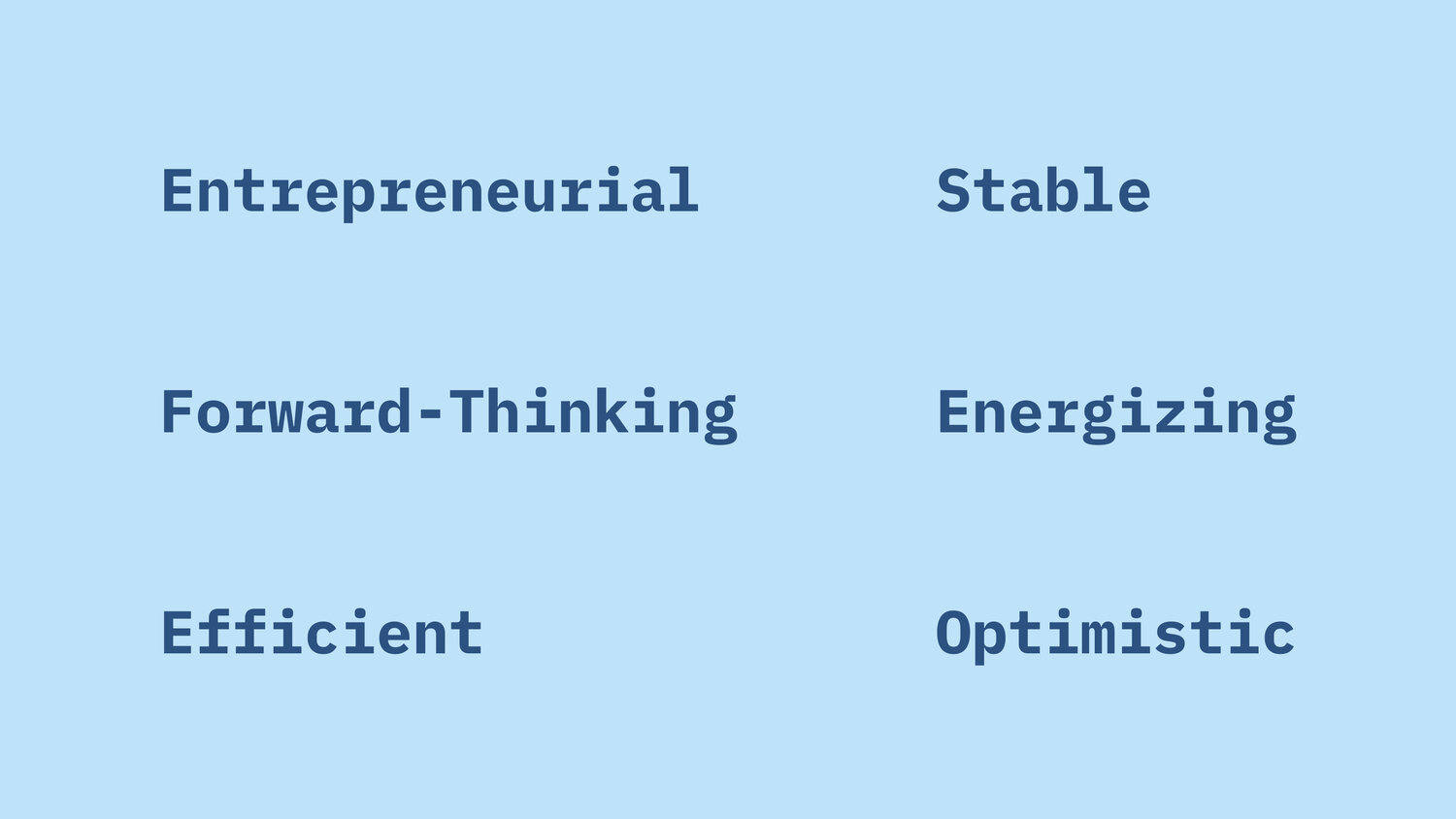

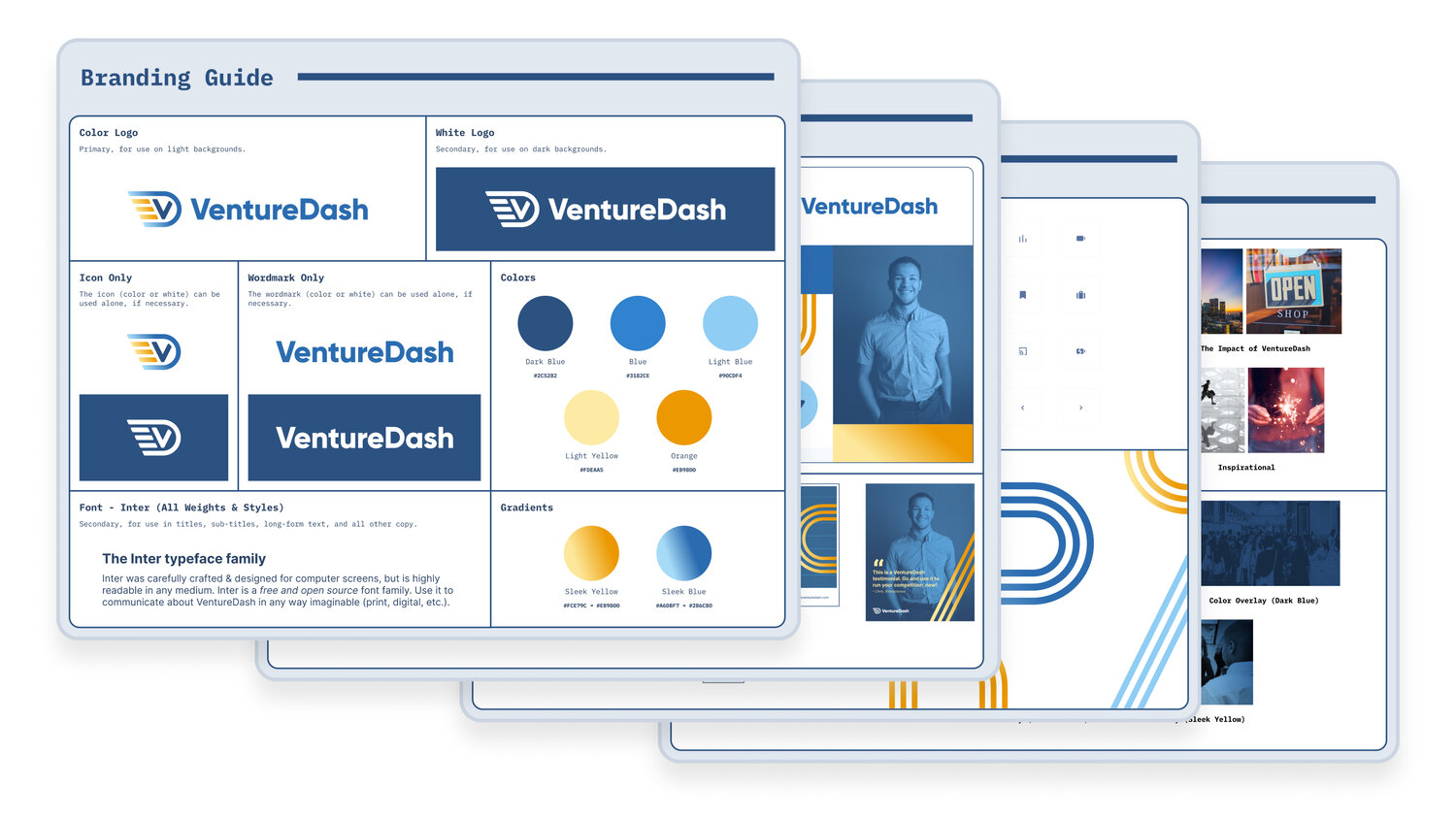
Top left: Brainstorming, Top right: Brand values, Bottom left: Brand mood board, Bottom right: Brand guidelines
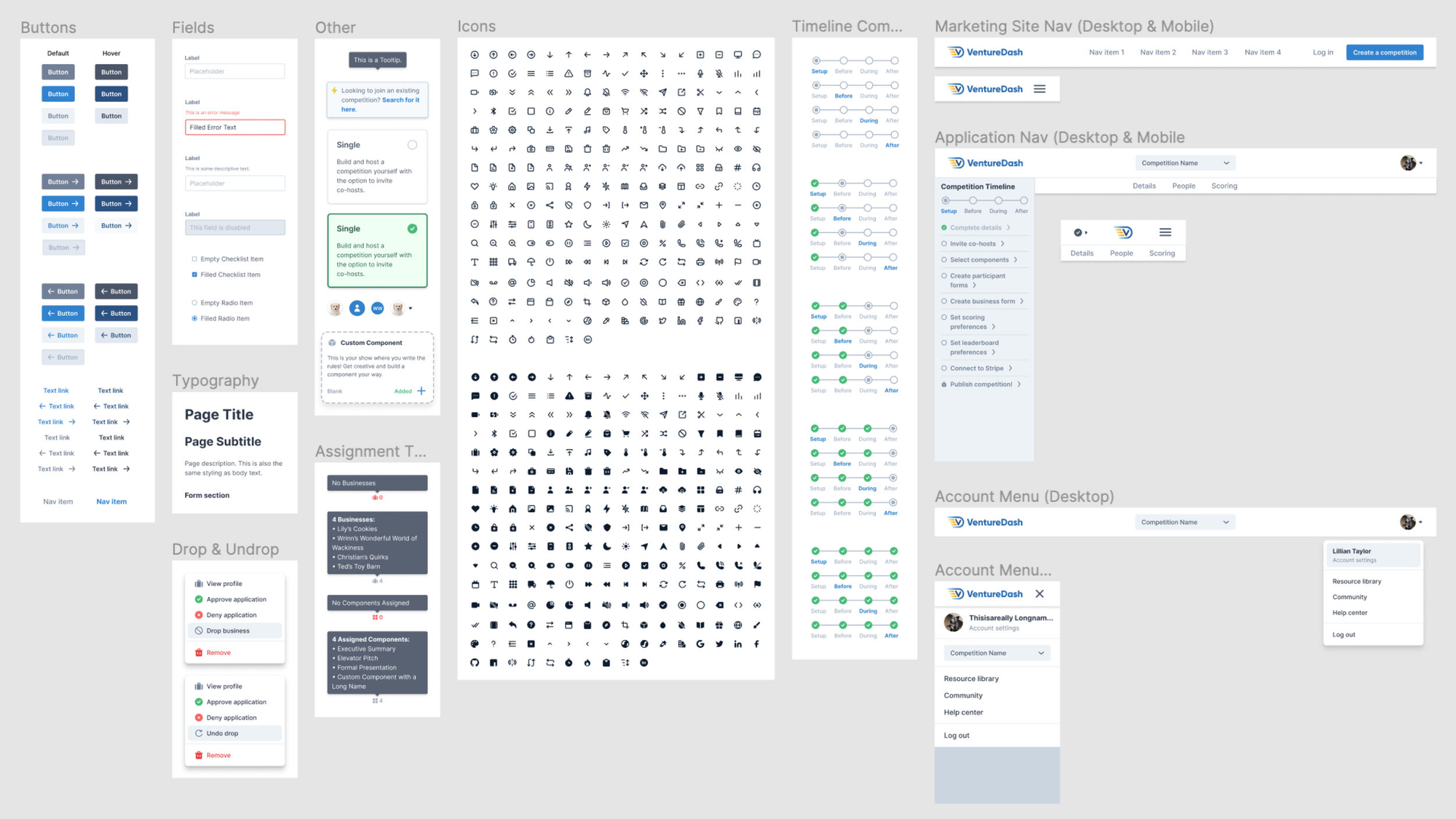
A Design System Built for Speed
Our team at Moonbase Labs was lean: two developers and me. While a comprehensive design system can help large teams maintain consistency, building one for this project would have been overkill and would have slowed us down considerably.
I created what I call a "Lean Design System": a focused component library with just what we needed to build fast and stay consistent. Buttons, form inputs, cards, navigation patterns, typography scales, and spacing rules. Clear usage guidelines, minimal documentation overhead.
The strategy: Give developers everything they need to build independently while freeing me to focus on complex interaction patterns, information architecture, and new features.
This approach worked beautifully. Developers could implement standard pages without designer handoff. I spent my time on the hard problems like designing the competition timeline interface, creating a dynamic landing page builder, and solving judging workflows.
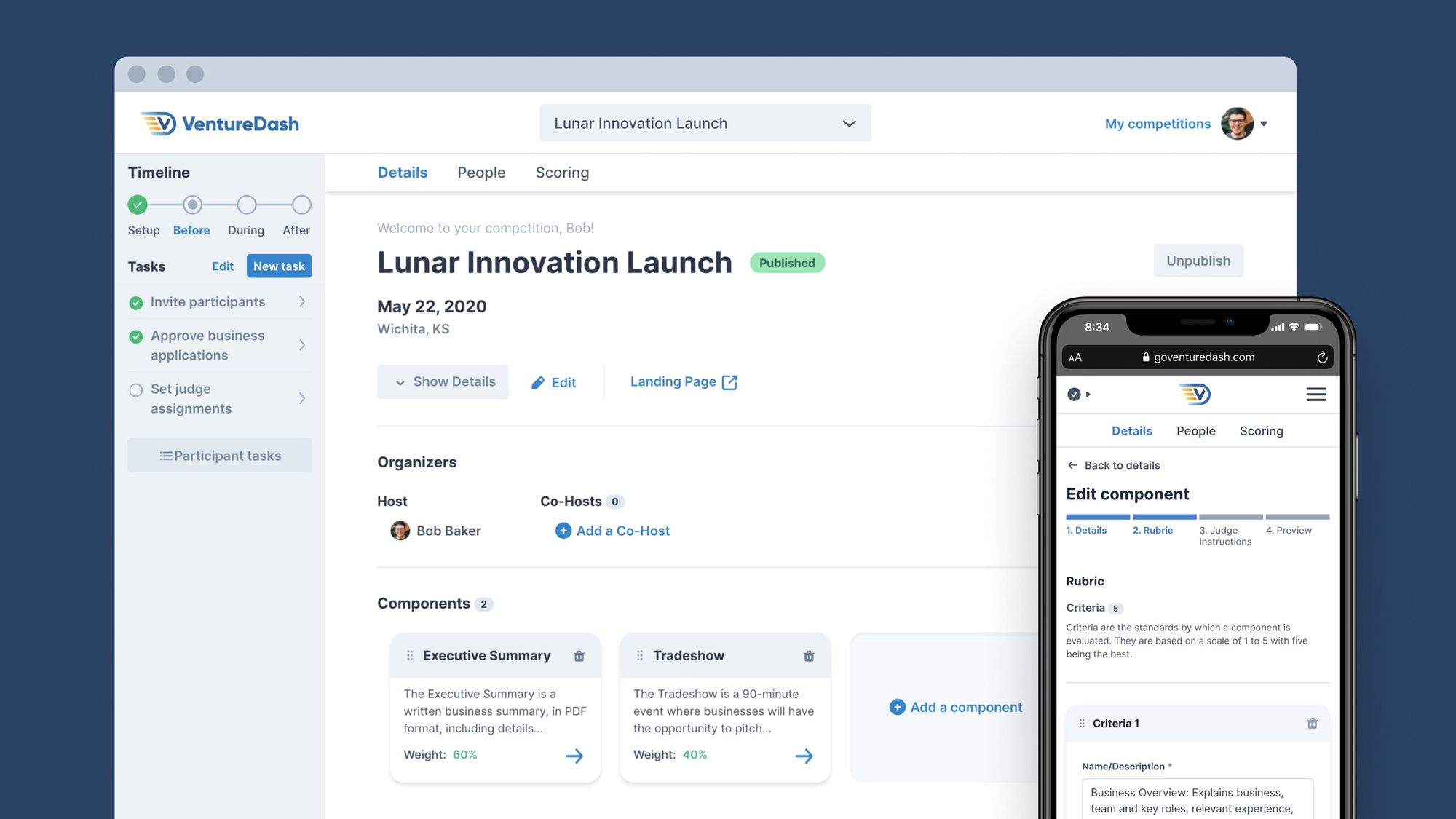
Designed for First-Time Organizers
The core insight driving every design decision: most people using VentureDash would be running (or participating in) their first business competition. They needed confidence and guidance, not a blank canvas.
The Competition Timeline
Competition organizers told me their biggest anxiety was keeping track of what needed to happen when. Missing a deadline or forgetting a critical task could derail an entire event.
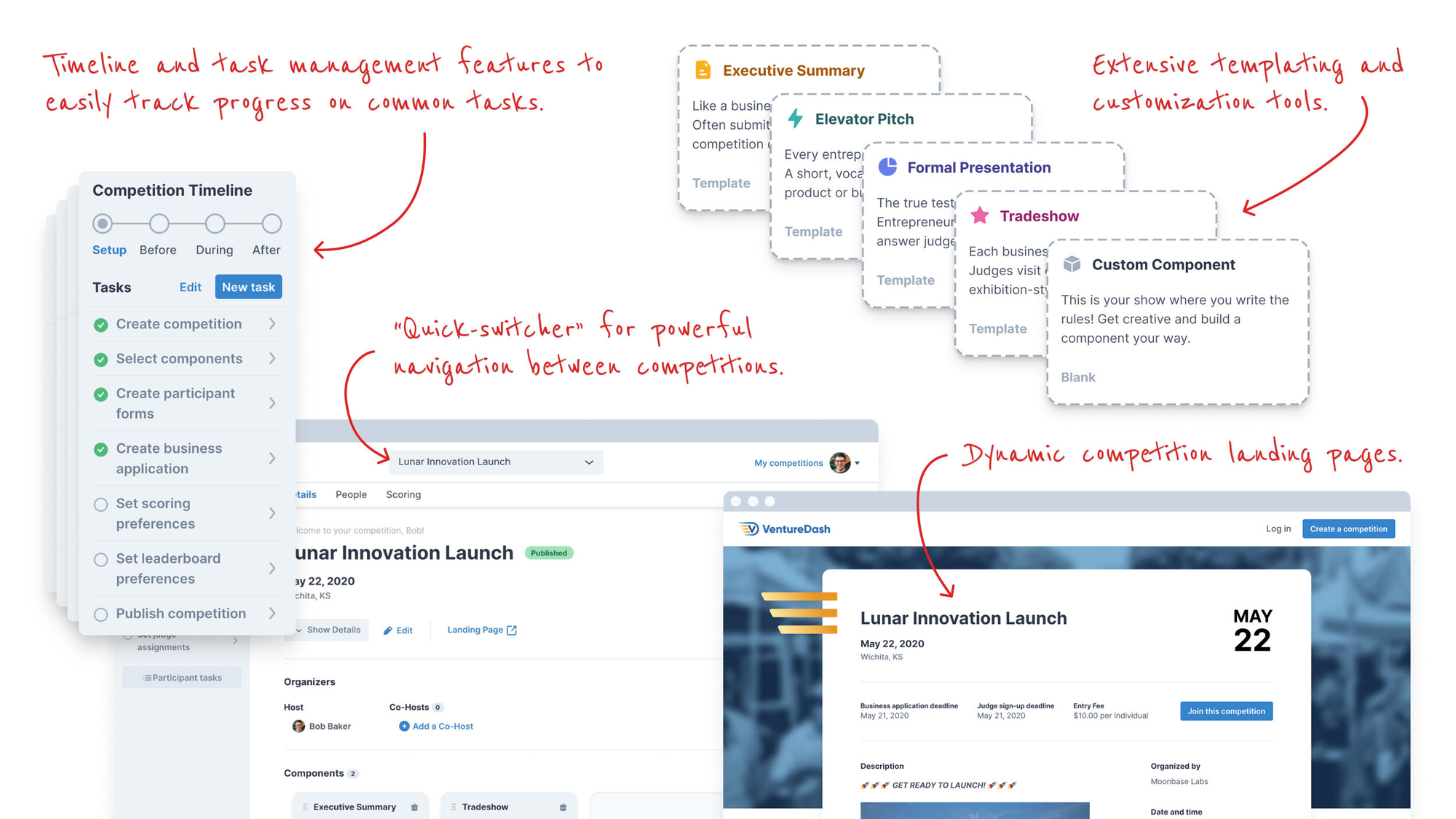
I designed a visual timeline that works like a progress bar. It was simple enough that first-time hosts could follow it, and detailed enough that experienced organizers could customize their workflow. Each phase (Setup, Before, During, After) breaks down into specific tasks with clear completion states. Quick-add buttons let organizers create their own unique steps.
Design rationale: Linear, left-to-right progression maps to how people mentally model project timelines. A progress indicator provides quick visual scanning. Completed tasks are checked off, helping organizers focus on what's next.
Template Library with Customization
Rather than making organizers build everything from scratch, I created a template library based on NetWork Kansas's proven competition formats. An elevator pitch competition looks different from a business plan competition—different scoring criteria, different application requirements, different judging structures.
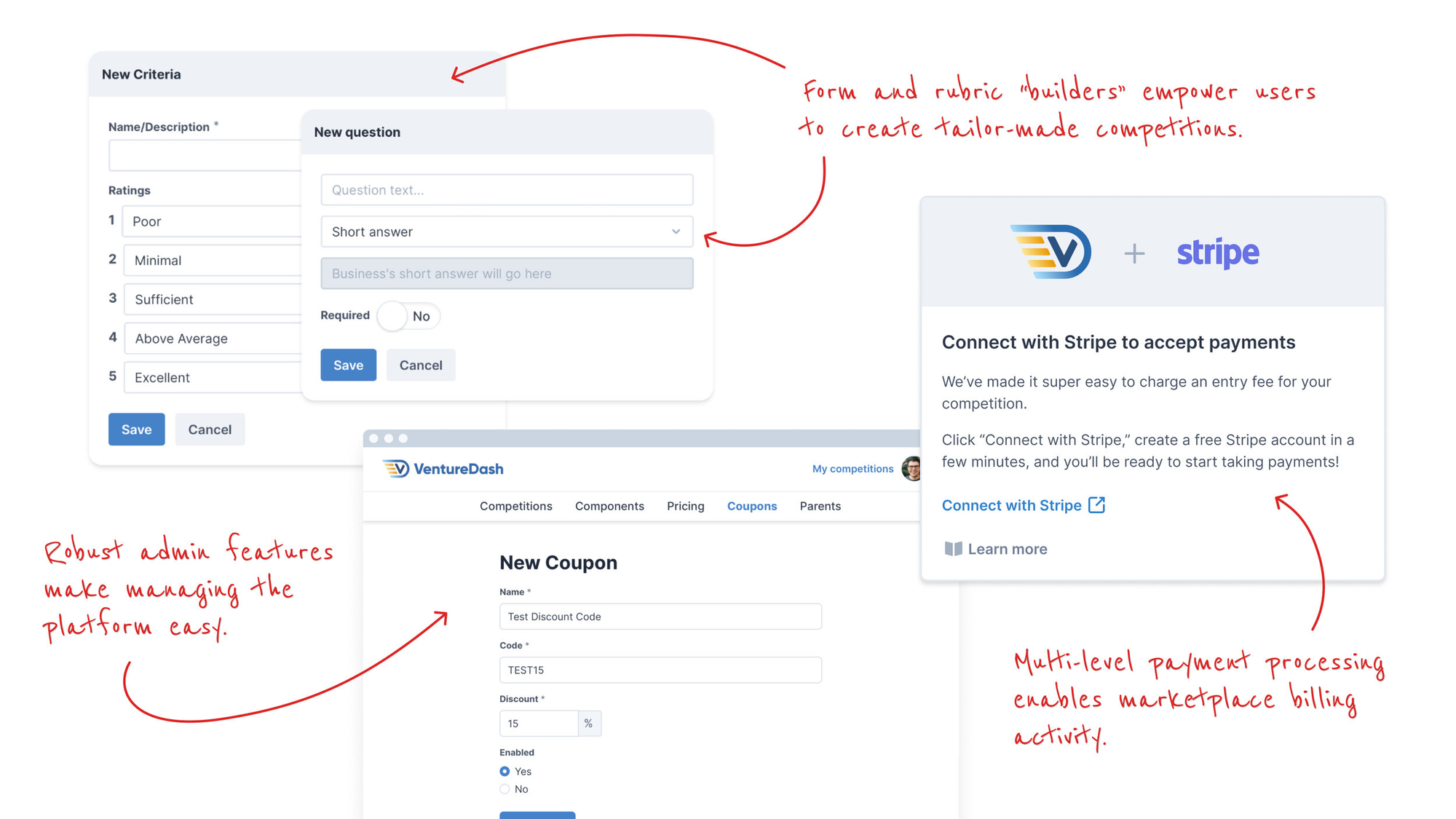
Templates handle the complexity upfront. But advanced users can customize everything with custom scoring rubrics, unique application forms, and adjustable judging workflows.
Design rationale: Start with the most common use case (using a template) and layer in complexity only when needed. This approach reduces cognitive load for beginners without limiting power users.
Dynamic Landing Pages
Every competition needs a public-facing page where participants learn about the event and apply. These pages needed to look professional without requiring design skills or technical knowledge.
I designed a system where organizers fill in content (competition description, deadlines, prizes, sponsors) and the platform automatically generates a polished landing page. Competitions can customize nearly any aspect of their competition, but the underlying structure ensures these pages always look good.
Design rationale: Separate the content from the presentation. Organizers think about what to say, not how to lay it out. This dramatically reduces time-to-launch and eliminates poor design outcomes.
Judging Interface
Judging is the heart of any competition, but it's also the most complex part to manage. I designed an interface that presents judges with one participant application at a time, scores criteria on a clear rubric, and tracks progress through their assigned applications.
For organizers, the scoring dashboard provides real-time visibility into judges' progress, highlights scoring discrepancies, and carries them smoothly to the competition's final awards stage where winners are announced.
Design rationale: Judges should focus on evaluating participants, not navigating software. The interface removes everything unnecessary. There are no extensive menus, no extra navigation, just the application content and scoring rubrics. Progress indicators reassure judges they're making progress.
Powerful Features for Advanced Users
While VentureDash is designed for first-time organizers, we also built features for more sophisticated use cases.
Competition Series
Organizations running multiple competitions, like annual events and regional qualifiers, can create series with shared templates and branding. Build a competition's structure once, apply it across all competitions in the series.
Custom Scoring Rubrics
Advanced users can create completely custom scoring criteria with weighted categories and complex calculation rules.
Stripe Integration
Built-in payment processing lets organizers charge application fees at any level, enabling the platform to support for-profit competitions and revenue-generating events.
Multi-stage Competitions
Some competitions have multiple rounds (application review, semi-finals, finals). I designed a system, using the series feature, where organizers can set up each stage with different judging panels, criteria, and advancement rules.
Helping NetWork Kansas Run the Product
Building a powerful SaaS platform is one thing. Operating it is another. NetWork Kansas's team had entrepreneurship expertise but limited technical resources. When we delivered VentureDash, I helped set up the infrastructure they'd need to run it successfully:
- Marketing site: Custom promotional site explaining features, building credibility, and converting visitors into customers
- Help center: Comprehensive documentation organized by user type (organizers, judges, participants)
- User community: Forum for organizers to share best practices and get peer support
- Analytics setup: Key metrics to track adoption, engagement, and retention
- Payment processing: Stripe Connect configuration for marketplace billing
I also trained their team on each system, created internal documentation, and established processes for handling common scenarios (customer support, bug reports, feature requests).
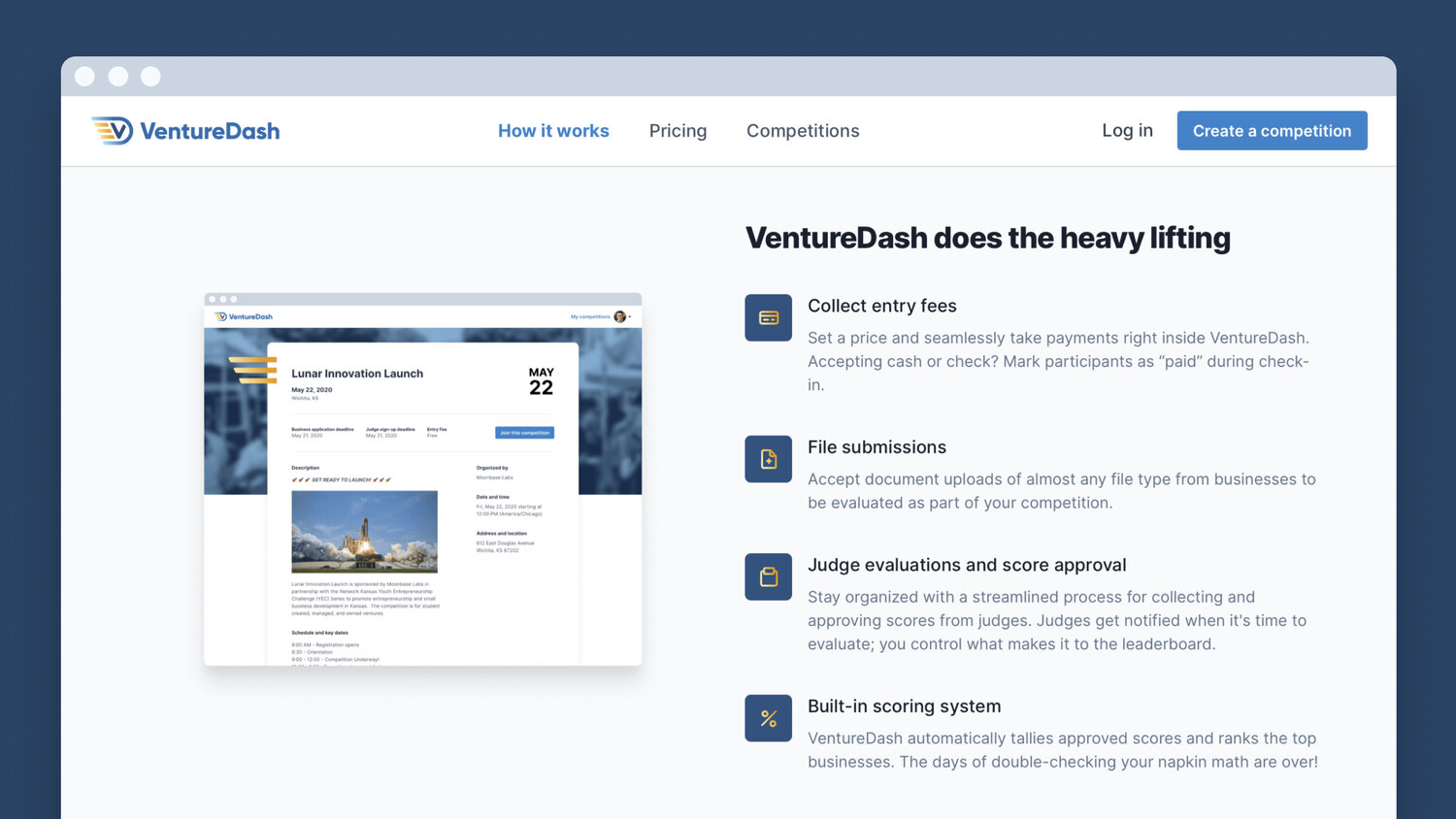

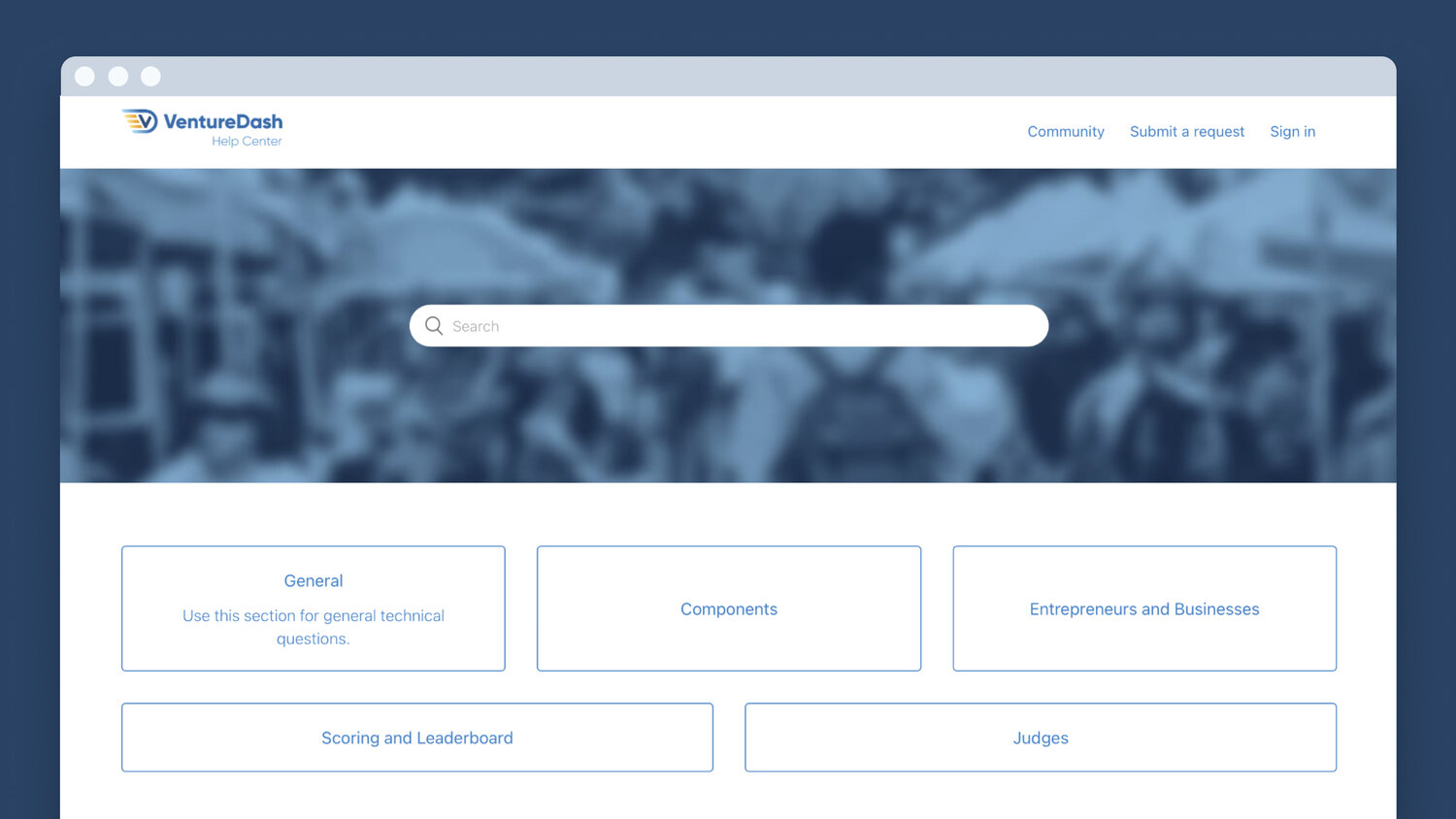
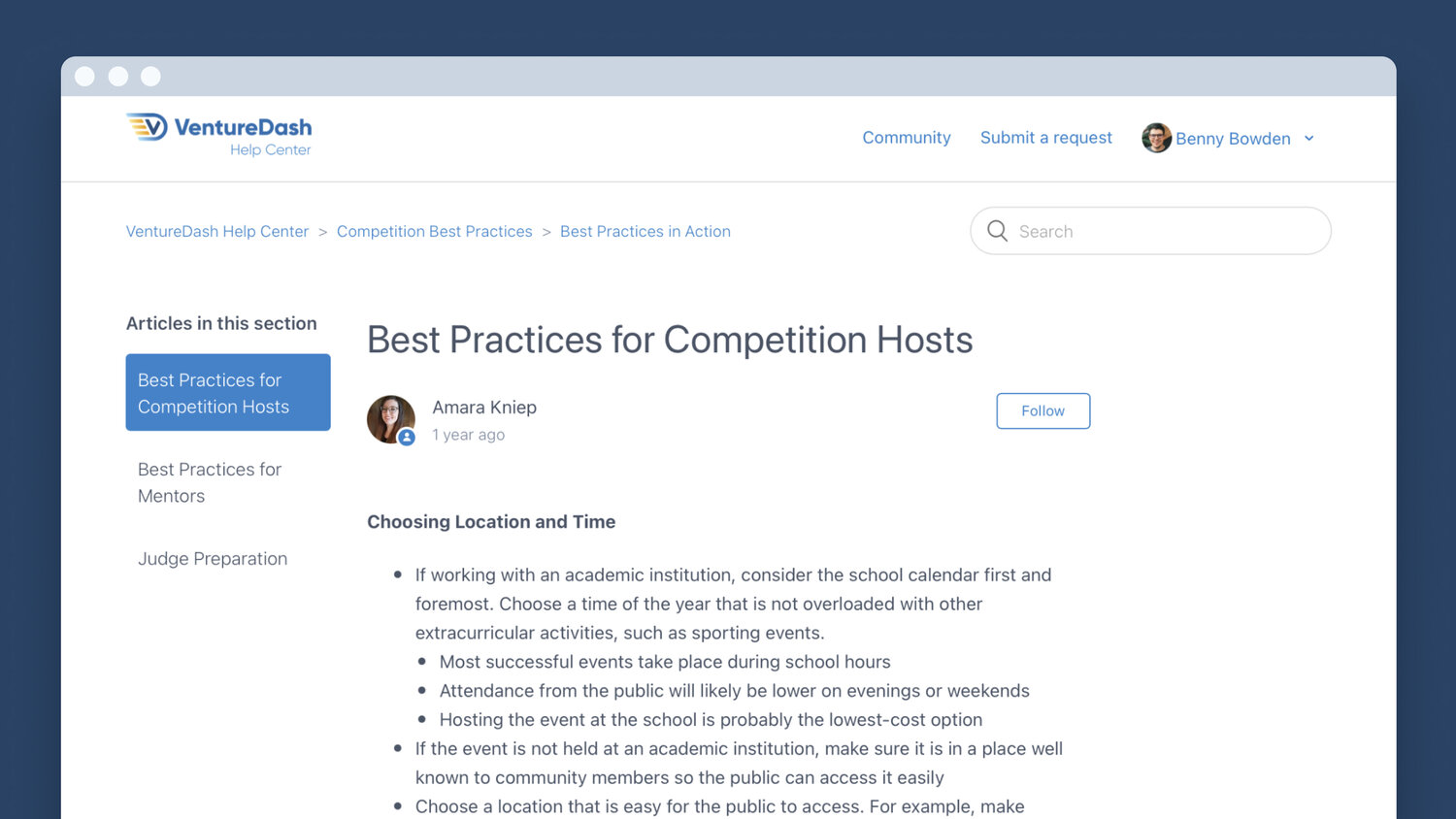
Top left: Marketing site, Top right: Website icons, Bottom left: Help center, Bottom right: Help center article
Launch and Impact
VentureDash went live in early 2020. Within the first year, the platform hosted 140+ competitions with 2,000+ participants. Kansas State University, West Virginia University, and Boise State University all ran their business college entrepreneurship competitions on VentureDash.
But the real validation came from an unexpected challenge: COVID-19.
When the pandemic hit and in-person pitch events became impossible, universities and nonprofits suddenly needed virtual competition infrastructure. The platform we'd built for convenience became essential. Organizations that had been hesitant about online competitions found they could run high-quality events remotely.
NetWork Kansas's own annual competition series was forced to go entirely virtual, yet hit a record 898 student competitors from 46 Kansas communities. During a pandemic. The virtual barrier had been removed.
✦ 140+ competitions in first year
✦ 2,000+ participants
✦ Major universities adopted platform
✦ Enabled organizations to pivot to virtual during the pandemic
✦ NetWork Kansas achieved record participation in their annual competition
User Testimonials
“VentureDash both streamlines and illuminates the process of hosting entrepreneurial events.” — Jeffrey S.
“Within minutes, I was able to build my competition, invite mentors, students and judges. Students were easily able to create a business and upload their documents. Everything ran perfectly on the day of the competition.” — Mollea W.
“I felt comfortable with VentureDash, allowing me to give my full attention to the students. The platform was easy to navigate and ran efficiently, which made the process of judging a competition very smooth.” — Gentry S.
What I Learned
Sometimes the best solution isn't the one the client asked for. NetWork Kansas came asking for a better internal tool. By taking time to understand their actual opportunity, we built something with much bigger impact.
Expertise is undervalued by those who have it. NetWork Kansas saw their competition methodology as "just how we do things." But that process, which they refined over years, was their competitive advantage. Good design research uncovers what clients don't realize they have.
Design systems should match team capacity. A lean design system serving a small team beats an comprehensive system that becomes documentation overhead. Build what you need, not what design blogs say you should have.
The best interfaces teach without feeling like tutorials. VentureDash guides first-time organizers through complex processes without making them feel stupid. Timelines, templates, and defaults do the teaching invisibly.
Let's Design Your Product
Looking for a product design partner on your next project? I take on select freelance work and welcome new collaborations.
Project Details
Team: 2 developers, 1 designer (me)
Company: Moonbase Labs (agency)
Client: NetWork Kansas
Live project: goventuredash.com
Responsibilities:
- User research and competitive analysis
- Product strategy and positioning
- Brand development (naming, identity, guidelines)
- Information architecture
- Design system creation
- UI/UX design for complete platform
- Developer collaboration and handoff
- Marketing site design
- Client training and documentation